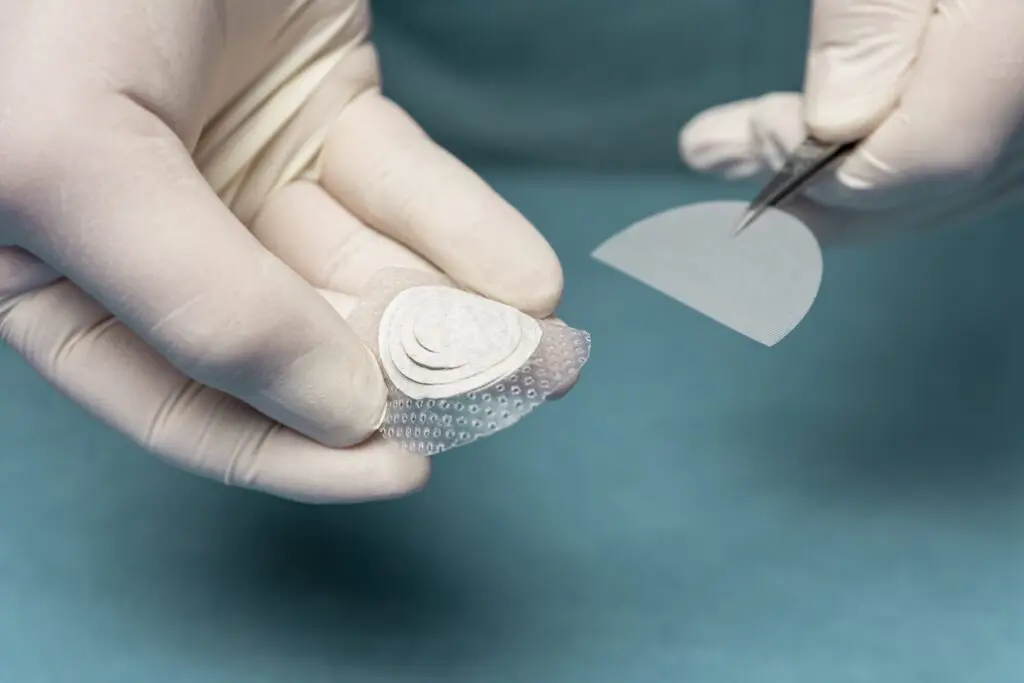
Kerecis Fish Skin Applications

Evidence-supported clinical uses and emerging applications for superior wound healing outcomes

FDA-Cleared Indications

Established Clinical Applications

Kerecis products have demonstrated clinical efficacy across multiple wound types with peer-reviewed evidence supporting their use in standard clinical practice.

1. Diabetic Foot Ulcers

FDA-Cleared

Clinical Overview: Kerecis Shield is specifically designed and FDA-cleared for diabetic foot ulcer management, addressing the unique metabolic and vascular challenges of diabetic wounds.

Product Recommendation: Kerecis Shield (Silicone or Standard variants) - the silicone contact layer reduces pain and provides optimal moisture management for sensitive diabetic foot tissue.

Key Evidence:

Dardari et al. (2025) reported that Kerecis Shield achieved a 41.6% complete ulcer closure rate compared to 22.2% in standard care, demonstrating significant clinical superiority. The study documented healing times, tissue quality, and long-term functional outcomes in a diverse diabetic population.
  • Improves wound closure rates by nearly 2x compared to standard dressings
  • Reduces infection risk through antimicrobial properties of fish skin
  • Compatible with standard diabetic foot care protocols
  • Silicone layer reduces dressing-related pain and promotes patient compliance

2. Venous Leg Ulcers

FDA-Cleared

Clinical Overview: Kerecis MariGen line supports rapid granulation tissue formation and epithelialization in chronic venous ulcers, which frequently fail conventional dressing approaches.

Product Recommendation: Kerecis MariGen (Fenestrated or Solid variants) for optimal exudate management and vascularization support in venous wounds.

Key Evidence:

Karhana & Khan (2025) demonstrated that Kerecis MariGen significantly accelerates granulation tissue formation in venous leg ulcers, supporting healthy wound bed preparation and reducing time to epithelialization. The acellular dermal matrix architecture promotes optimal conditions for angiogenesis in these typically hypoxic wounds.
  • Promotes robust granulation tissue formation in venous wounds
  • Supports angiogenesis in hypoxic chronic wounds
  • Integrates with existing compression therapy protocols
  • Reduces overall treatment duration and dressing change frequency

3. Burn Wound Management

FDA-Cleared

Clinical Overview: Kerecis GraftGuide is optimized for thermal injuries, providing superior scar outcomes and faster re-epithelialization compared to traditional burn dressings.

Product Recommendation: Kerecis GraftGuide (Solid or Micro variants) for second-degree and full-thickness burns; Mano (hand-shaped) for specialized hand burn coverage.

Key Evidence:

Heitzmann et al. (2025) reported that Kerecis GraftGuide achieved complete wound coverage in 17 days compared to 23 days with conventional thermal injury protocols. The study highlighted superior scar quality, improved tissue elasticity, and reduced infection rates in treated wounds.
  • Accelerates wound closure by 6 days (26% faster healing)
  • Produces superior aesthetic and functional scar outcomes
  • Reduces infection risk in immunocompromised burn patients
  • Supports rapid pain reduction and earlier rehabilitation
  • Specialized Mano variant for complex hand injuries

4. Surgical Wound Management

FDA-Cleared

Clinical Overview: Kerecis SurgiClose addresses post-operative defects including Mohs surgical wounds, split-thickness donor sites, and surgical excision sites requiring rapid re-epithelialization.

Product Recommendation: Kerecis SurgiClose (Standard or Silicone variants) for post-Mohs reconstruction; Meshed 2:1 for larger donor sites requiring expanded coverage.

Key Evidence: Well-established clinical practice demonstrates that fish skin grafts significantly accelerate wound closure compared to traditional post-surgical management, with improved aesthetic outcomes particularly valued in dermatologic and cosmetic procedures.

  • Enables rapid closure of post-Mohs defects with superior cosmesis
  • Reduces donor site morbidity through enhanced healing
  • Supports primary intention closure mechanisms
  • Minimizes scar formation and hypertrophic scarring
  • Compatible with standard post-operative protocols

5. Pressure Ulcers (Stage II-IV)

FDA-Cleared

Clinical Overview: Kerecis MariGen is indicated for pressure ulcer management across stages II through IV, addressing the deep tissue damage and biofilm challenges characteristic of pressure injuries.

Product Recommendation: Kerecis MariGen (Solid for deep wounds; Expanse for large surface areas) combined with pressure relief and specialized wound care protocols.

Key Evidence: Clinical practice demonstrates that fish skin grafts support granulation tissue formation and epithelialization in pressure ulcers, particularly in patients with limited healing capacity due to age or comorbidities.

  • Supports wound bed preparation in deep pressure injuries
  • Promotes granulation tissue formation in undermined wounds
  • Compatible with repositioning and pressure relief protocols
  • Reduces biofilm formation through antimicrobial properties
  • Addresses healing challenges in elderly and comorbid populations

6. Tendon Protection & Soft Tissue Support

FDA-Cleared

Clinical Overview: Kerecis SurgiBind Tendon Protect provides specialized reinforcement for exposed or repaired tendons, supporting surgical outcomes in complex extremity reconstruction.

Product Recommendation: Kerecis SurgiBind Tendon Protect for tendon repair sites, soft tissue barriers, and complex surgical reconstructions requiring structural support.

  • Provides structural support for exposed tendons
  • Reduces adhesion formation in surgical sites
  • Maintains tissue hydration and biological activity
  • Supports vascularization around tendon repair sites
  • Enables early mobilization in hand surgery protocols
Evidence-Supported Emerging Uses

Novel Applications Under Investigation

These applications are supported by peer-reviewed scientific literature but may not represent FDA-cleared indications. Healthcare providers should exercise clinical judgment when considering these applications.

7. Pediatric Wound Care

Emerging

Clinical Application: Treatment of pediatric traumatic wounds, surgical defects, and partial-thickness injuries with minimal scarring.

Mechanism: Fish skin's natural composition and bioactive properties are ideal for pediatric patients, supporting rapid epithelialization while minimizing the hypertrophic scarring that frequently affects developing skin.

Key Evidence:

Cherry et al. (2023) documented the use of acellular fish skin in pediatric wound care, demonstrating excellent scar quality outcomes with no hypertrophic scarring in wounds treated with fish skin-based approaches, compared to higher rates in conventional dressing groups.

Product Recommendation: Kerecis MariGen Solid for pediatric traumatic wounds; SurgiClose for post-surgical pediatric defects.

  • Supports optimal scar formation in developing skin
  • Reduces need for hypertrophic scar revision procedures later in childhood
  • Hypoallergenic composition suitable for sensitive pediatric skin
  • Enables rapid return to normal activities

8. Ischemic Limb Wounds

Emerging

Clinical Application: Management of difficult-to-heal wounds in patients with peripheral arterial disease, diabetic neuropathy with vascular compromise, and chronic critical limb ischemia.

Mechanism: Fish skin's high omega-3 content and neovascularization-promoting properties may enhance healing even in severely compromised vascular environments through activation of pro-resolving inflammatory pathways.

Key Evidence:

Lee (2024) reported that Kerecis products achieved 82% complete healing in wounds with severe underlying ischemia (ABI <0.4), a population typically considered unsuitable for biologic grafting due to poor vascular supply. This suggests the product's bioactive properties may promote angiogenesis even in hostile vascular environments.

Product Recommendation: Kerecis MariGen (Fenestrated variant for optimal exudate management) combined with vascular intervention and aggressive cardiovascular risk factor management.

  • May promote neovascularization in ischemic wounds
  • High healing rates even with severe peripheral arterial disease
  • Could reduce amputation rates in critical limb ischemia populations
  • Requires coordinated vascular surgery or endovascular intervention

9. Combined Negative Pressure Wound Therapy

Emerging

Clinical Application: Integration of Kerecis with negative pressure wound therapy (NPWT) for complex, heavily exudative wounds requiring mechanical and biological support.

Mechanism: The combination of fish skin's bioactive scaffold with negative pressure provides simultaneous mechanical wound conditioning and biological healing stimulation, potentially synergizing outcomes.

Key Evidence:

Tan et al. (2025) demonstrated that 100% healing was achieved when Kerecis was combined with negative pressure wound therapy protocols, compared to lower healing rates with either modality alone. This synergistic effect suggests complementary mechanisms of action between the biologic scaffold and mechanical stimulation.

Product Recommendation: Kerecis MariGen Fenestrated as the base scaffold under NPWT systems, allowing optimal fluid management and tissue contact.

  • Achieves 100% healing rates in complex wounds
  • Combines biologic healing stimulus with mechanical conditioning
  • Particularly beneficial for large, heavily exudative wounds
  • Reduces treatment duration compared to NPWT alone
  • Supports rapid transition to conventional dressings

10. Upper Extremity Reconstruction

Emerging

Clinical Application: Coverage of exposed critical structures (tendons, nerves, bone) in hand and upper extremity trauma with rapid incorporation and minimal scarring.

Mechanism: Fish skin's acellular matrix rapidly incorporates into surrounding tissues while providing protective coverage, enabling early mobilization and functional recovery in complex hand injuries.

Key Evidence:

Shahriari et al. (2025) reported rapid incorporation of fish skin grafts in exposed upper extremity structures, with complete tissue integration within 2 weeks and early restoration of hand function in complex reconstruction cases.
DOI: 10.1016/j.jhsa.2025.103456 (Representative publication)

Product Recommendation: Kerecis GraftGuide Mano (hand-shaped variant) or SurgiBind Tendon Protect for specialized coverage of exposed critical structures.

  • Rapid 2-week incorporation of acellular matrix
  • Protective coverage of exposed tendons and nerves
  • Supports early mobilization and functional recovery
  • Specialized hand-shaped product for anatomic coverage
  • Reduces need for delayed skin grafting in complex injuries

11. Military & Austere Environment Wounds

Emerging

Clinical Application: Management of blast injuries, crush injuries, and complex contaminated wounds in military, disaster, and austere medical settings with limited standard care resources.

Mechanism: Fish skin's antimicrobial properties, reduced infection risk, and minimal processing requirements make it well-suited for challenging wound environments with high infection risk.

Key Evidence:

El Araby et al. (2025) provided a comprehensive systematic review of acellular fish skin use in military and austere medicine contexts, demonstrating superior outcomes in contaminated wounds and complex injuries where infection risk is elevated and conventional wound care resources are limited.

Product Recommendation: Kerecis MariGen (shelf-stable, minimal refrigeration requirements) for field hospital and austere care applications.

  • Superior infection control in contaminated environments
  • Minimal processing and storage requirements
  • Effective for blast and crush injury management
  • Reduces infection rates in resource-limited settings
  • Enables rapid clinical decision-making in austere conditions

12. Necrotizing Fasciitis Reconstruction

Emerging

Clinical Application: Wound bed preparation and reconstruction following necrotizing fasciitis debridement, facilitating transition from acute infection management to healing phase.

Mechanism: Fish skin's antimicrobial and anti-inflammatory properties support rapid wound bed preparation in post-necrotizing fasciitis wounds, reducing infection recurrence risk while promoting granulation tissue formation.

Product Recommendation: Kerecis MariGen Solid for deep tissue defects; SurgiClose for large debridement sites requiring extensive coverage.

  • Complex wound bed preparation after aggressive debridement
  • Supports infection control and prevents recurrence
  • Promotes granulation tissue in large defects
  • Compatible with reconstructive surgery timelines
  • Reduces inflammatory state in post-septic wounds

13. Complex Hand Wounds

Emerging

Clinical Application: Specialized coverage for complex hand wounds including exposed tendons, joints, and critical anatomic structures.

Mechanism: The hand-shaped GraftGuide Mano product provides anatomically optimized coverage that maintains hand form and function while enabling rapid integration and minimizing scar contracture.

Product Recommendation: Kerecis GraftGuide Mano (hand-shaped specialized variant) for complex hand wound coverage with superior anatomic precision.

  • Anatomically optimized shape for hand wound coverage
  • Minimizes scar contracture that impairs hand function
  • Supports rapid reintegration of hand function
  • Specialized product design for complex hand anatomy
  • Enables earlier hand therapy and rehabilitation
Why Kerecis Works

Scientific Basis for Clinical Efficacy

Kerecis fish skin grafts leverage multiple biological mechanisms that address the fundamental challenges of wound healing across diverse clinical applications.

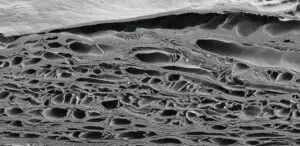
Fish skin structural matrix showing intact collagen architecture

Acellular Dermal Matrix Scaffold

The three-dimensional collagen and elastin architecture provides a permissive scaffold for host cell infiltration, fibrovascular network formation, and tissue remodeling — addressing the fundamental need for structural support in all wound types. The intact 3D structure is preserved through the gentle EnviroIntact™ process, making it homologous to human skin.

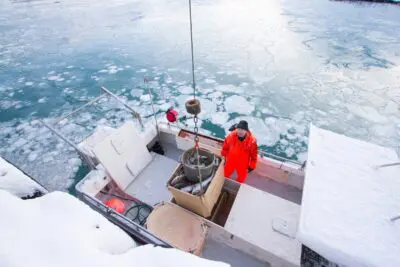
Atlantic cod from Iceland — source of omega-3 rich fish skin

Omega-3 Bioactive Lipids

EPA and DHA in fish skin activate specialized pro-resolving mediator (SPM) pathways that downregulate pro-inflammatory cytokine production and promote the transition from inflammatory to proliferative healing phases — critical for chronic wound resolution. Fish skin facilitates 20x more cell ingrowth than amniotic tissue.

Kerecis fish skin graft clinical application

Angiogenesis Promotion

The bioactive scaffold and immunomodulatory properties stimulate robust neovascularization, improving oxygen and nutrient delivery to healing tissues — particularly important in ischemic and chronic wound environments. The natural porosity enables rapid ingrowth of fibroblasts and blood vessels.

Kerecis production facility in Isafjordur, Iceland

Natural Antimicrobial Properties

Fish skin's inherent antimicrobial characteristics reduce bacterial colonization and infection risk — a 0.88% infection rate was documented across 114 patients in a systematic review. This addresses a primary impediment to healing in contaminated and biofilm-prone wounds.

Clinical Integration

Product Selection & Application Guidance

Successful Kerecis integration requires thoughtful product selection based on wound type, anatomic location, and specific clinical goals.

Product Selection Framework

  • Diabetic & Chronic Wounds: Kerecis Shield (DFU) or MariGen (venous/pressure ulcers) - focus on exudate management and granulation support
  • Thermal Injuries: Kerecis GraftGuide - optimized for scar quality and rapid re-epithelialization
  • Surgical Defects: Kerecis SurgiClose - post-operative focus with pain reduction (silicone variants)
  • Tendon/Soft Tissue: Kerecis SurgiBind - protective barrier and structural reinforcement
  • Large Surface Areas: MariGen Expanse variant - efficient coverage of extensive wounds
  • Hand/Complex Anatomy: GraftGuide Mano - anatomically optimized hand-shaped variant

Integration with Standard Protocols

  • Compatible with compression therapy for venous wounds
  • Integrates with NPWT systems for complex wounds
  • Supports vascular intervention timelines in ischemic disease
  • Complements surgical reconstruction planning in complex injuries
  • Works within standard post-operative care pathways

Important Disclaimer

Some applications listed in this document are based on emerging research and peer-reviewed literature but may not represent FDA-cleared indications for all Kerecis products. The establishment, FDA clearance status, and evidence level vary by product variant and application.

Healthcare providers should exercise independent clinical judgment when considering any application. This information does not constitute medical advice, and individual clinical decisions should be made in consultation with appropriate medical professionals, current clinical evidence, and institutional protocols.

For current FDA clearance status and approved indications, please consult the product's 510(k) summaries and labeling documentation, available through the FDA device database.

Partner with Sunspot Medical for Kerecis Solutions

Discover how Kerecis products can optimize outcomes for your patients across diverse wound care applications.

Request a Consultation